Career Roadmaps

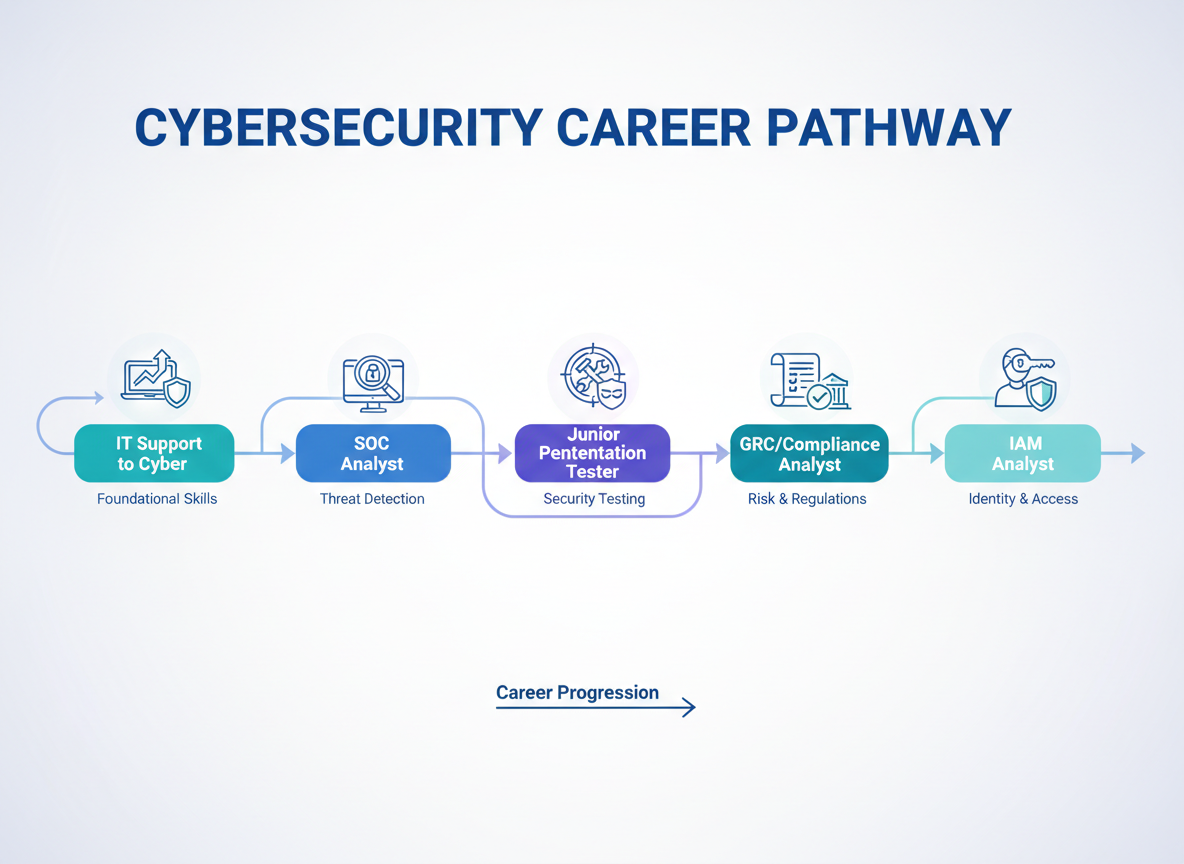


Entry-Level Cybersecurity Careers + Certs
1. SOC Analyst (Tier 1 Security Analyst)
What you do: monitor alerts, investigate threats, respond to incidents
Certifications:
- CompTIA Security+ (most important starter cert)
- CompTIA Network+ (strongly recommended)
- Microsoft SC-900 (Security Fundamentals)
- Splunk Core Certified User (great for SOC jobs)
Best starting combo: Security+ + basic Splunk knowledge
2. IT Support → Cybersecurity Pathway
What you do: troubleshoot systems, manage users, support devices
Certifications:
- CompTIA A+ (best entry IT cert)
- CompTIA Network+ (next step)
- Google IT Support Certificate (beginner-friendly)
- CompTIA Security+ (bridge into cyber)
Why it works: IT Support is the #1 feeder role into cybersecurity
3. Junior Penetration Tester / Ethical Hacking Assistant
What you do: test systems for vulnerabilities and security flaws
Certifications:
Next step cert (later):
- CEH (Certified Ethical Hacker)
4. SOC Technician / Cyber Defense Analyst
What you do: monitor security systems and respond to threats
Certifications:
- CompTIA Security+
- CompTIA CySA+ (Cybersecurity Analyst – next level)
- Microsoft SC-200 (Security Operations Analyst)
- Splunk Core Certified User
5. Compliance / Risk Analyst (GRC Entry Role)
What you do: policies, audits, regulatory compliance (HIPAA, ISO, etc.)
Certifications:
- CompTIA Security+
- ISO 27001 Foundation
- Certified in Cybersecurity (ISC² CC)
- CISA (later, advanced)
Best for structured, non-technical cyber roles
6. IAM Analyst (Identity & Access Management)
What you do: manage logins, permissions, user access systems
Certifications:
- CompTIA Security+
- Microsoft SC-300 (Identity & Access Administrator)
- Azure Fundamentals (AZ-900)
Why it’s in demand: every company needs secure user access control
Fastest Certification Path (Beginner Plan)
If you want the quickest way into cyber:
Step 1 (Start here)
- Google Cybersecurity Certificate OR CompTIA A+
Step 2
- CompTIA Security+
Step 3
Pentesting → eJPT
 THE AFTER CHAPTER